 Clover Tech
Case study · WhatsApp CRM and lead follow-up
Every enquiry answered. Every lead followed up.
A lead-driven business was paying for enquiries that waited hours for a reply and rarely got a second message. We built a WhatsApp-first CRM that replies straight away, keeps following up on schedule, and tells the sales team who to call.
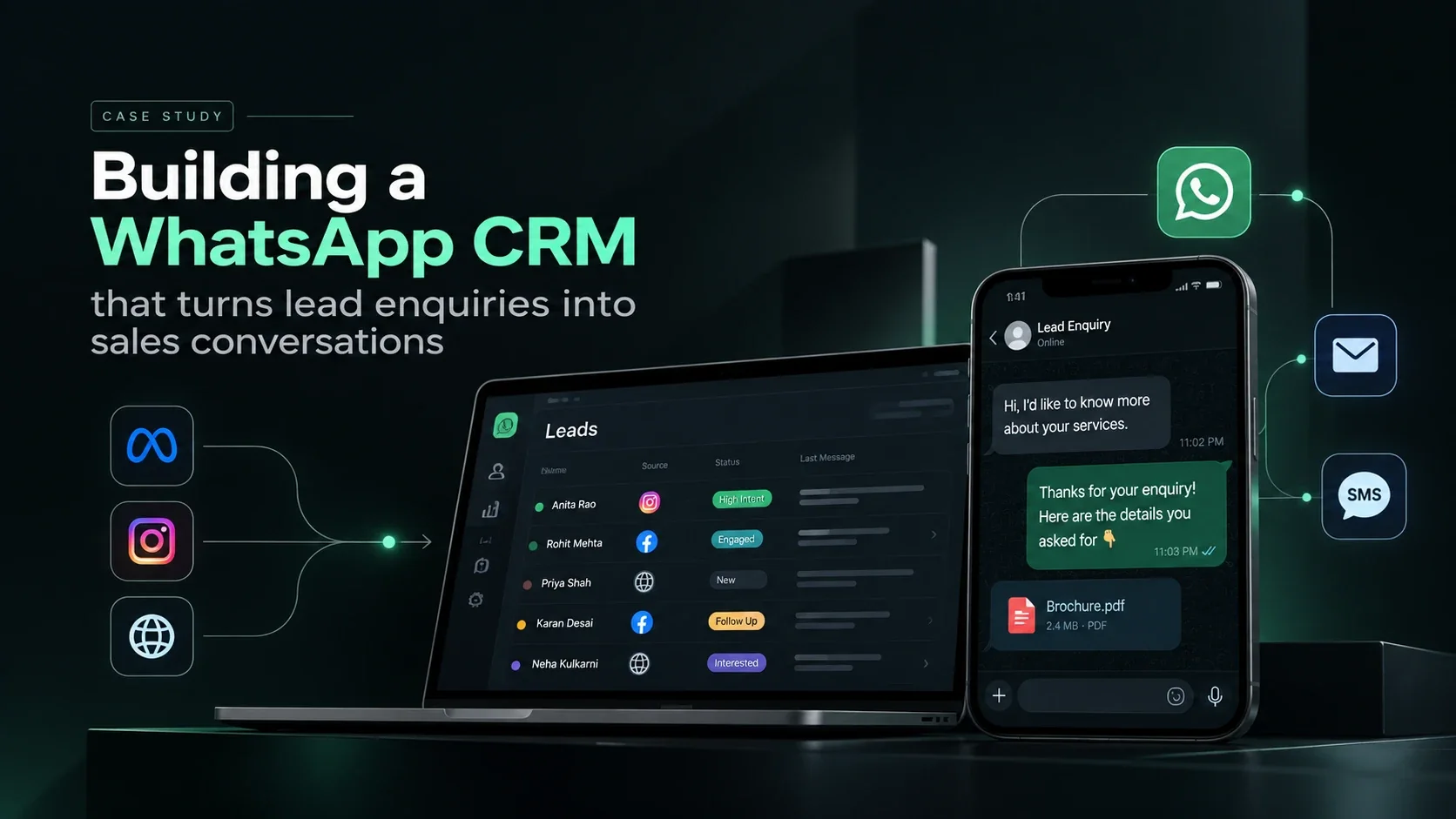
An illustration of the system. The names shown are examples, not the client's customers.
What changed
Follow-up stopped depending on memory.
Every enquiry is answered on WhatsApp straight away, nights and weekends included.
The second, third and fourth messages go out because they're scheduled, not remembered.
Leads are ordered by what they did, with the reason shown next to each one.
WhatsApp, email and SMS for each person live in a single record.
The problem
Getting leads was never the problem. What happened next was.
The business paid for every enquiry through ads and listings. Then the lead waited for someone to notice it.
An enquiry at 11 PM sat untouched until the next working morning, at best.
Even in office hours, a reply depended on someone noticing the lead and having the time.
Most leads got one message, then silence. Every later touch depended on a salesperson's memory.
Nobody could tell who had read the messages or asked about price, so every lead looked the same.
Ad platforms, forms, personal phones and inboxes. No single place held the history.
There was no reliable way to see whether follow-up had happened, or which leads had gone quiet.
The sales team wasn't underperforming. They were being asked to be a scheduler, a reminder system and a filing cabinet, all while trying to sell.
How it works
The system does the chasing. The team does the selling.
- Every enquiry lands in one placeAds, forms and WhatsApp messages become one record per person, with no duplicates.
- An instant reply on WhatsAppThe enquiry is answered by name straight away, at any hour.
- Follow-ups on a scheduleThe next messages go out on time, and stop the moment the lead replies.
- The hot ones go to salesReads, replies and price questions push a lead up the queue, with the reason attached.
A CRM records what your team did. This one decides what happens next when nobody has time to.
One lead, five days
From an 11 PM enquiry to "call her today".
- Day 1 · 11:02 PMAn enquiry arrives
"Need a quote for 200 units. Do you deliver to Pune?" from an Instagram ad. Nobody at the business is awake.
- Day 1 · 11:03 PMA WhatsApp reply goes out
By name, answering the delivery question and saying when a person will follow up.
- Day 2The brochure goes by email
Documents suit email better than chat. It's logged in the same record.
- Day 3She opens the pricing
The first sign she's comparing, not just browsing.
- Day 4A reminder on WhatsApp
Sent as an approved template, as WhatsApp's rules require after 24 hours. Had she replied, it would never have gone out.
- Day 5Marked high priority
Quantity, delivery, reads and pricing add up. She goes to the top of the sales queue.
An illustrative example: "Anita Rao" isn't a real customer, and the timings show how the steps fit together rather than measured results.
People stay in charge
Automation was never the salesperson.
The system handles
- Answering every new enquiry straight away
- The predictable first questions
- Scheduling and sending follow-ups
- Sending brochures and quotes by email or SMS
- Tracking deliveries, reads and replies
- Ranking the queue and raising the alert
Your salesperson handles
- Complex or unusual questions
- Pricing judgement and exceptions
- Negotiation and closing
- Every conversation that shows real interest
- Anything that needs a human decision
The moment a salesperson takes over, the automated messages stop. They open the same thread the customer has been reading, with the enquiry and the history in front of them, so nobody has to repeat themselves. And a lead who asks to talk is treated as high intent and goes straight to a salesperson.
Before and after
What changed in the sales team's day.
Built to WhatsApp's rules
Automated, without putting the number at risk.
- Uses the WhatsApp Business Platform with Meta-approved templates, not a bulk-messaging tool.
- Follows WhatsApp's 24-hour rule: after that, only Meta-approved message templates go out.
- Each contact's consent is stored with their record, and an opt-out stops all messages to them.
- The same enquiry arriving twice is treated as one lead, so nobody is messaged twice.
- Before any scheduled message goes out, the system re-checks whether the lead has replied, opted out or been called.
Connects to the channels you already use
Sending too much hurts a WhatsApp number's quality rating and how many people it can message, so follow-up is paced on purpose.
Your business
Stop losing the leads you've already paid for.
Tell us where your enquiries come from. If it's a fit, we'll show you how every one of them would be followed up.
Fix my follow-up →The client's name is withheld. The picture and the five-day example are illustrations, not real customers. We don't publish conversion or response-time figures, because none were measured for this project.